
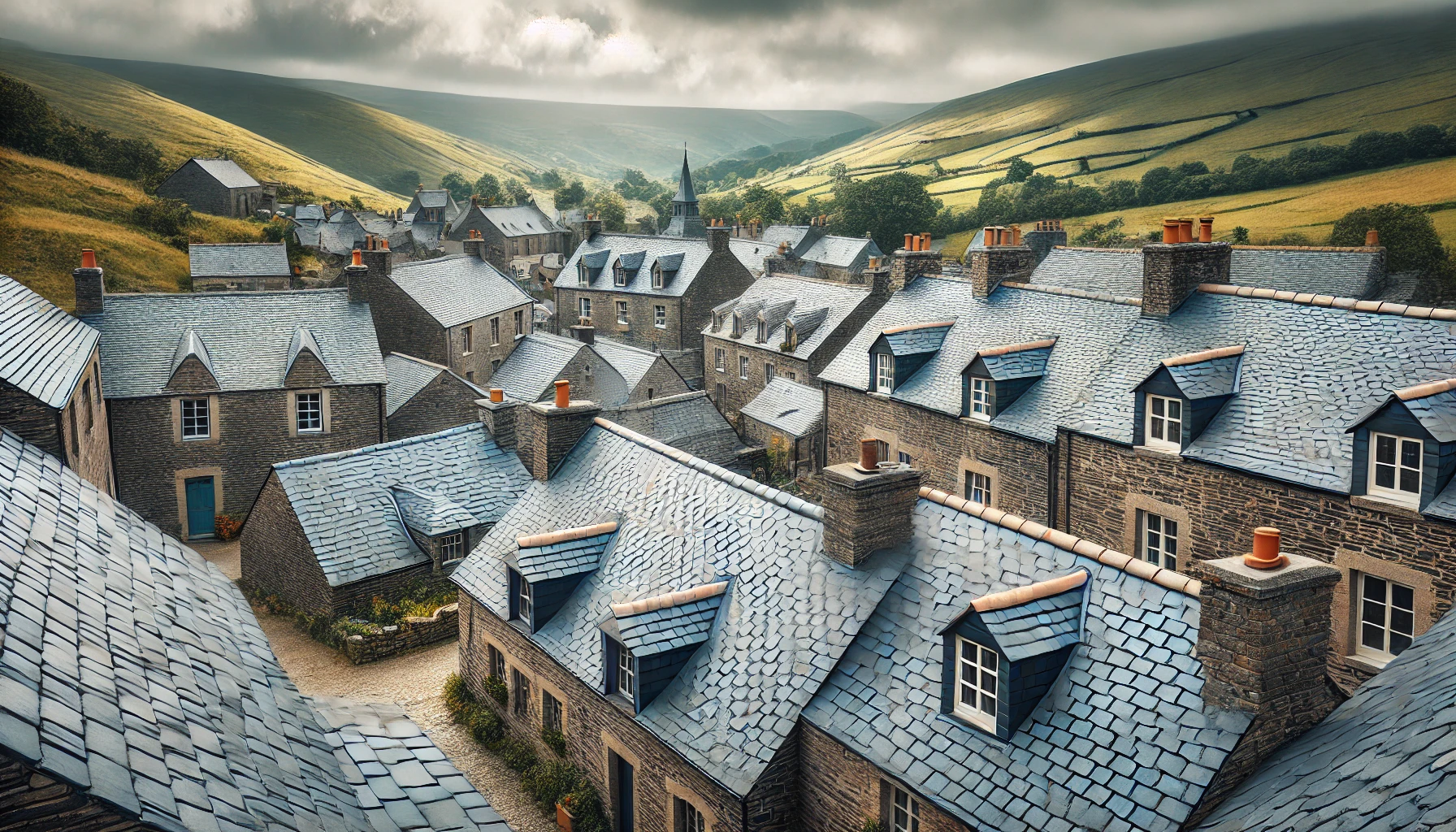
Slate roofing stands out among many options for home protection. Homeowners often choose it because slate lasts a very long time and looks great on any house.
Many older buildings still have their original slate roofs after more than 100 years. This material comes from natural stone that forms over millions of years. As a result, each tile resists weather better than most other choices.
Why Slate Lasts So Long
Slate handles tough conditions well. It does not rot or get damaged by insects. Fire cannot burn through it easily.
Heavy rain, strong winds, and hail often bounce off slate tiles. Freeze and thaw cycles happen in cold areas, yet slate rarely cracks from them. Proper installation helps slate roofs reach 100 years or more.
Some even go past 200 years with good care. Hard slate types from certain areas prove extra tough. Soft slate works fine too but may not hold up quite as long. Homeowners rarely need to replace a slate roof in their lifetime. This saves money over time compared to shorter-lived materials.
The Beauty of Slate Roofs
Slate adds a classic look to homes. Tiles come in shades like gray, green, purple, black, and red. Mixing colors creates patterns that catch the eye. Natural variations in each tile give a unique texture. No two roofs look exactly alike.
This appeal fits historic houses and modern ones alike. Curb appeal rises when slate covers the top. Buyers often pay more for homes with this feature.
Slate keeps its color for decades in many cases. Some types change slightly over time, adding character.
How Slate Compares to Common Asphalt Shingles
Asphalt shingles cost less at first. Workers install them quickly on most homes. Yet they usually last only 20 to 30 years. Then replacement comes again. Slate weighs more, so roofs need strong support.
But once up, the slate needs little fixing. Asphalt can tear in high winds or fade fast in the sun. Slate stays strong through storms.
Over many years, slate often costs less overall. According to Historic England, natural slate has one of the lowest embodied energy and carbon values of all roofing materials. It also helps the environment more since it lasts longer and comes from nature.
Installing a Slate Roof
Roofing contractors New Jersey start with a solid base. They nail each tile carefully, often using copper nails that last forever. Overlaps keep water out. Flashing around chimneys and edges seals tight spots.
Skilled roofers take time to get it right. Rushing leads to problems later. Houses may need extra beams to hold the weight. This step adds to the upfront price. Yet good work means the roof protects for generations.
Taking Care of Slate Roofing
Slate asks for little upkeep. Check it once a year for loose tiles. Clear leaves and branches that pile up. Fix any broken pieces right away.
Keep spare tiles from the original install handy. Walk carefully on the roof since tiles can break under feet. Moss sometimes grows in shady wet spots. Gentle cleaning removes it without harm. With these simple steps, the roof stays in top shape.
Types and Colors Available
Slate comes from different places, each with its own traits. Vermont offers greens and purples that may soften over time.
Virginia gives deep black that stays dark. Pennsylvania has softer blacks. Some slates never fade. Others shift colors slowly for a lived-in look.
Tiles vary in size and thickness too. Thicker ones add more strength. Blends of colors make roofs stand out.
Is Slate Worth It?
Many homeowners say yes for the long run. The roof becomes part of the house history. It boosts value when selling. Insurance may cost less due to fire resistance. Energy bills can drop a bit from natural insulation. Slate recycles easily at the end.
Though the start price is high, the benefits add up. Families pass down homes with slate roofs intact. If you want a roof that combines strength and style, slate delivers both.