
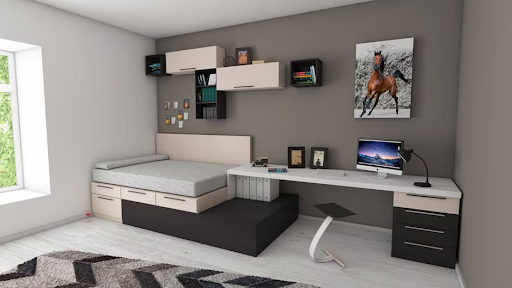
The family home has quite a lot to live up to these days. One minute, the dining table hosts breakfast; the next, it’s covered in homework, paperwork, or an ambitious craft project that has somehow taken over the entire room. With everyone needing something different from the same space, keeping things practical without sacrificing comfort can feel like a juggling act.
Fortunately, creating a multi-functional family space doesn’t necessarily mean extending your home or starting an expensive renovation. Often, it’s about making better use of the room you already have and finding clever ways to help it adapt as family life unfolds.
Create Different Areas Without Closing Everything Off
Open-plan living can be wonderful for families, particularly when you want to keep an eye on younger children while getting on with everyday tasks. However, sometimes everyone needs a little separation. Perhaps someone is working from home while the children are watching television, or one child needs a quiet corner to concentrate on homework.
Rather than building permanent walls, flexible room dividers can offer a practical compromise. For example, aluminium internal bifold doors allow adjoining spaces to be opened up when everyone wants to spend time together and separated when a little privacy is needed. Glazed designs can also maintain a sense of openness, letting natural light travel between rooms even when the doors are closed.
Choose Furniture That Works a Little Harder
When several people share a room, multi-purpose furniture can make everyday life much easier. A dining table might double as a homework station, while a storage ottoman can provide extra seating and a place to hide the inevitable collection of toys, blankets, and games.
Before buying anything new, think about how the room is used throughout the day. A beautiful piece of furniture is lovely, of course, but if it constantly gets in the way of family activities, its charm may wear off rather quickly.
Make Storage Part of the Design
Even the most carefully planned family room can feel chaotic when there’s nowhere for everyday belongings to go. The trick is to make storage accessible enough that everyone can use it. Low shelves and labelled baskets help younger children put their things away, while cupboards and drawers keep less attractive essentials out of sight. You don’t need everything hidden, either. A few favourite books, plants or decorative pieces can give the room personality without making it feel cluttered.
Give Everyone a Space of Their Own
Sharing a room doesn’t mean every family member has to enjoy exactly the same activities. A comfortable reading chair near the window, a small desk for schoolwork, or a cosy play area can help create a sense of personal space within a larger room. These little zones are particularly useful as children grow and their interests change. What begins as a corner for building blocks might eventually become somewhere to read, draw, or study.
Let the Space Change with Your Family
Remember that family life rarely stays the same for long. Children’s routines change, work arrangements evolve, and how you use your home naturally shifts over time. Instead of designing a room around one particular stage of life, choose flexible features that can adapt alongside you.
A successful multi-functional space isn’t necessarily the most stylish or perfectly organised room in the house. It’s one where everyone feels comfortable, daily life runs a little more smoothly, and there’s still room for the occasional bit of family chaos.